"I had AI read a document and it found a mistake" — you've probably heard stories like that a lot recently. It's convenient, sure, but have you ever paused and wondered, "what actually happens to that value after I send it?" This time, let's take it easy and trace that "after sending" part, using some diagrams along the way.
What This Article Covers
- "Sending," "inference," "storage," and "training" a document to an LLM are each separate stages
- Data you send is not necessarily used for training
- "Not used for training" doesn't mean it wasn't sent to an external service
- Points you should specifically check before feeding in numerical data like financial statements or invoices
- Data handling differs depending on the service type (consumer, enterprise, API)
When checking financial statement documents, having AI read multiple documents and cross-check the numbers revealed missing entries and numerical inconsistencies.
This kind of usage is quite natural as an application of LLMs. Across multiple documents,
- Cross-checking numbers
- Verifying totals
- Detecting missing entries
- Detecting inconsistencies between documents
having the LLM perform these tasks is a practical way to have it assist with work that a human would otherwise check one item at a time.
That said, there's one distinction we need to make here.
"The LLM read that number" and "that number became part of the LLM's training data" are not the same thing.
So when you feed a document containing numbers, such as a financial statement or invoice, into an LLM, where does the data actually flow? Let's organize this along the lines of how cloud-based LLM services generally work.
1. The Apparent Simplicity vs. the Actual Path
When using an LLM for numerical checks, the use case looks simple from the user's perspective.
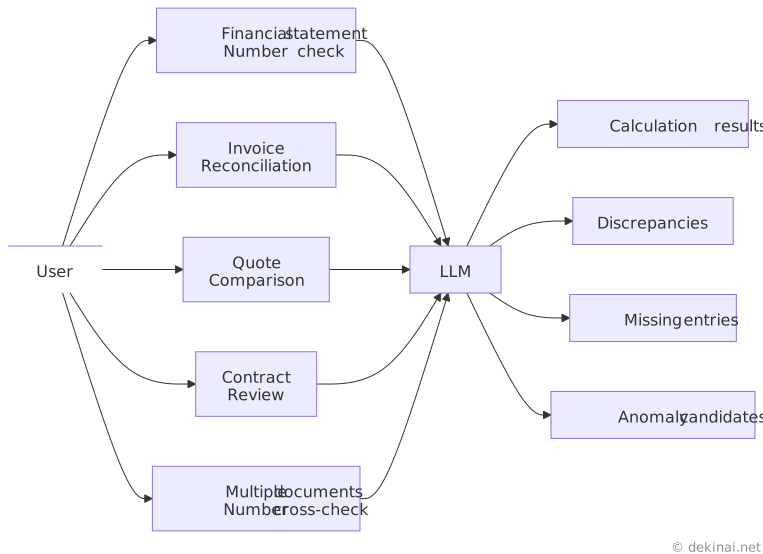
At first glance it looks like just "document → LLM → answer," but behind the scenes, many cloud-based LLM services have multiple data processing paths.
2. The Big Picture
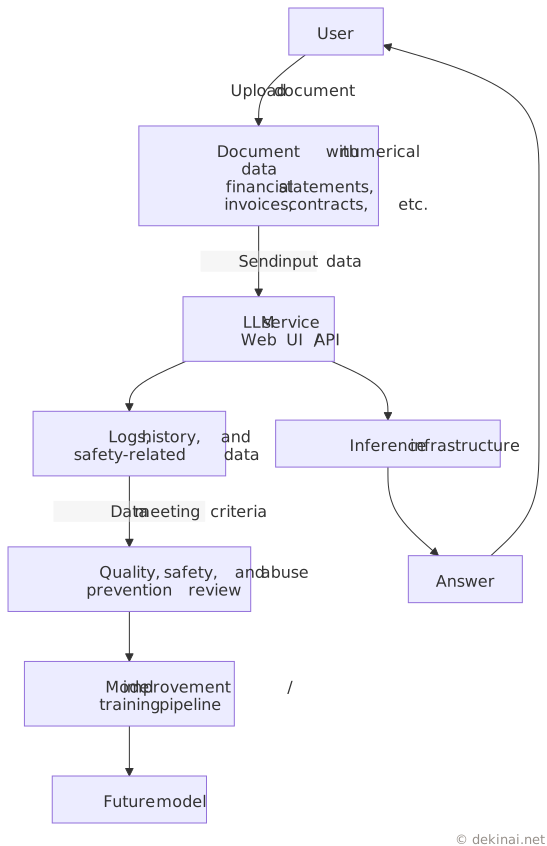
What's important here is that,
an input document is not necessarily used as-is for model training
That's the point. In many major LLM services, depending on the service contract, plan, and settings,
- It is processed temporarily for inference
- It is stored as conversation history, audit logs, or safety logs
- It may be subject to human review (e.g., for abuse prevention)
- It may be used for model improvement/training
- It is not used for training, but is retained for a certain period
handling generally varies in this way. In fact, many business-oriented and API-oriented plans explicitly state that they "do not use data for training by default," while some consumer-facing free plans have training use enabled by default — this difference needs to be checked for each service.
Therefore,
"the moment you input it into the LLM, that number gets written directly into the training model"
is not the simple structure at play here. On the other hand,
"if it's not used for training, then data wasn't handed over to an external service"
is not what it means either — that's something to be careful about.
3. How the "Numbers" Are Handled
Suppose, for example, you input a document like the following.
FY2026 Financial Statement

Revenue               ¥128,400,000
Cost of Sales           ¥71,200,000
Operating Income        ¥18,600,000
Cash and Deposits       ¥42,300,000
Borrowings               ¥15,000,000
In response to this,
Please check the numbers in this financial statement
and point out any inconsistencies in the totals or year-over-year comparisons.
is what you send. The conceptual processing flow looks like this.
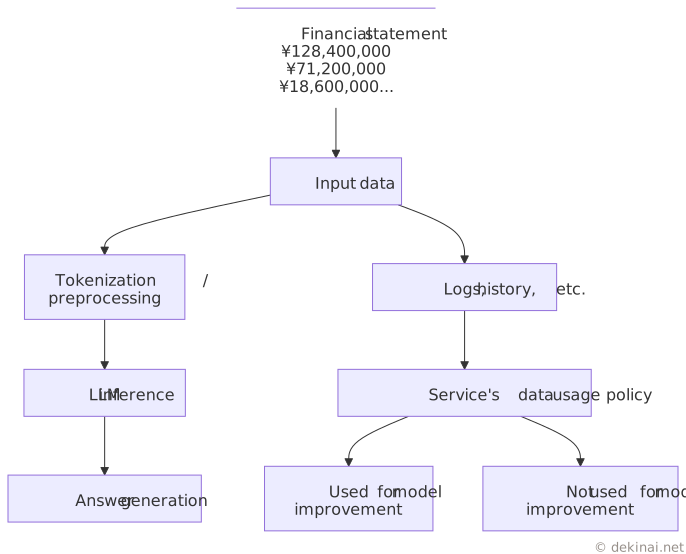
Here,
"the model read the numbers and answered"
and
"the numbers were used as training data for a future model"
need to be considered separately.
4. Sequence Diagram: From Inputting a Document to Getting an Answer
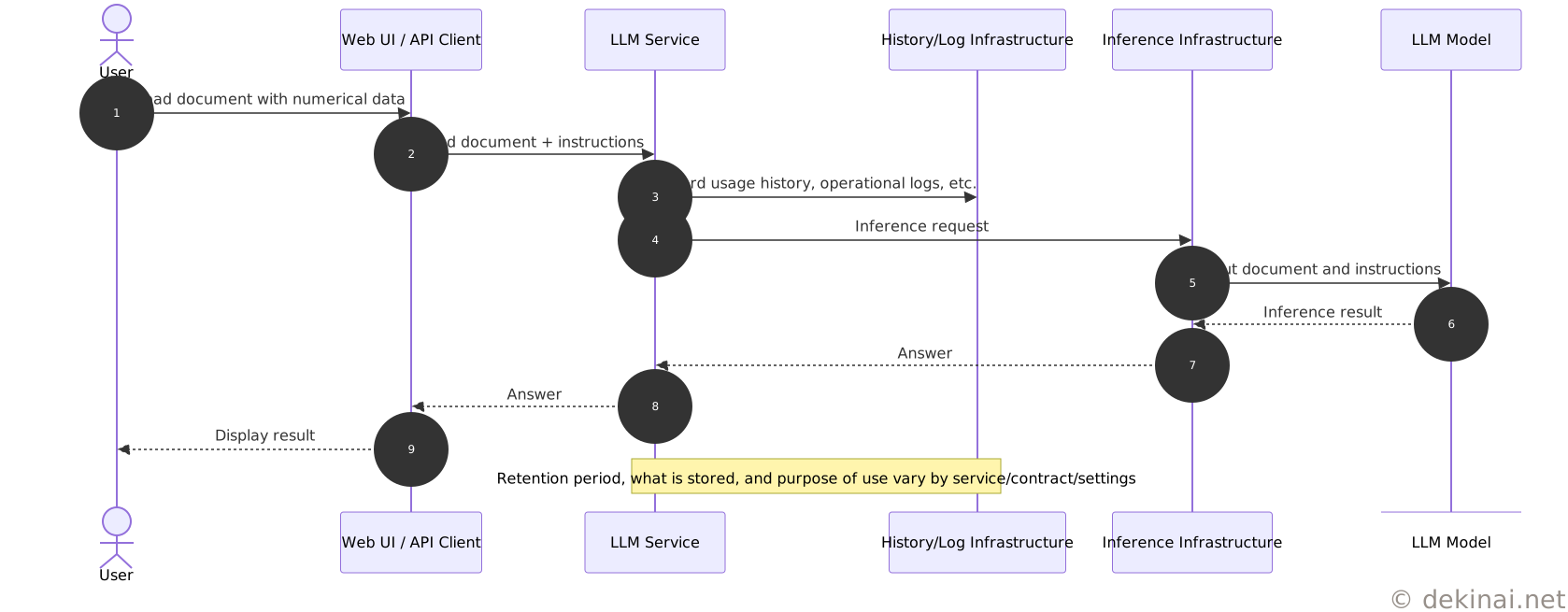
At this stage, the original document has at least been sent to the LLM service for inference. Beyond this point, separate questions arise, such as:
- What data gets stored
- How long it is retained
- Whether it's used for safety measures
- Whether it's used for model improvement
5. Breaking Down "Absorbed by the Provider"
If you take the phrase "absorbed by the provider" to mean "used for training" as-is, that's a somewhat sloppy understanding. Technically, it can be broken down into at least the following stages.
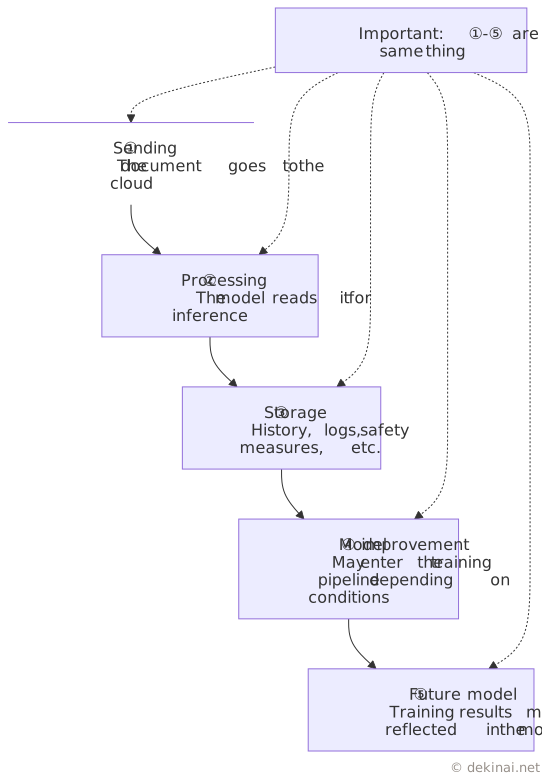
In other words, the five states — "was sent → was used for inference → was stored → was used for model improvement → was reflected in a future model" — are each distinct. In particular,
"the LLM read the numbers to produce an answer"
and
"those numbers were used as training data for a future model"
are separate events.
6. Sequence Including Model Training
For services, plans, or settings where user data is used for model improvement, an additional separate path exists.
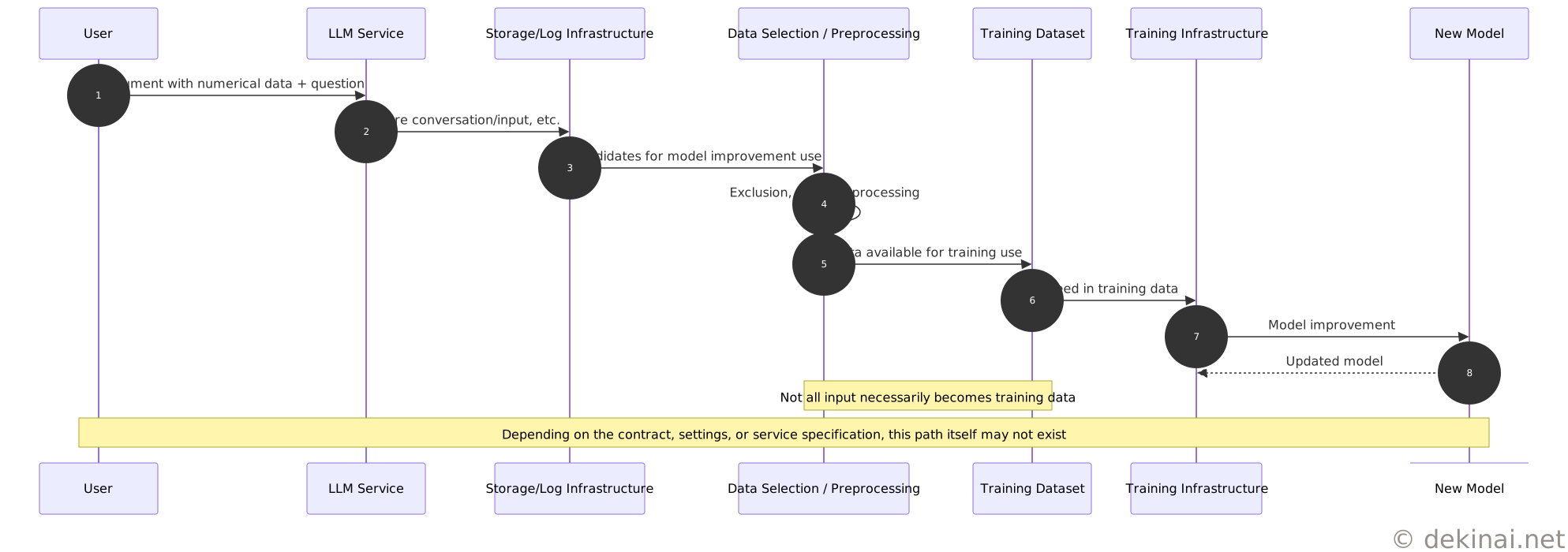
Here too, "the input data existing" and "that data entering the training dataset" are separate things.
7. Use Cases
Use cases for having an LLM handle documents containing numbers include, for example, the following.
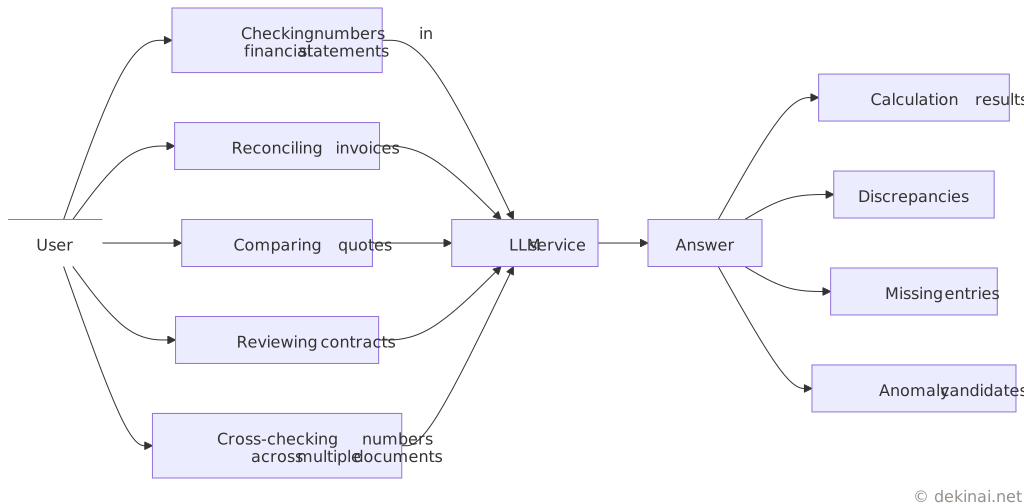
The issue is that doing so requires sending the original data to an external LLM service.
8. Why Numerical Data Is Especially a Concern
Financial statements and invoices differ in nature from ordinary general text. For example,
Revenue               ¥128,400,000
Operating Income       ¥18,600,000
Cash and Deposits      ¥42,300,000
Borrowings             ¥15,000,000
data like this includes revenue scale, profit scale, cash holdings, borrowing amounts, transaction amounts, unit prices, item counts, contract amounts, costs, payment terms, and so on. Beyond just parsing the meaning of the text, this can become information from which the financial condition of a company, individual, or business partner can be inferred.
Furthermore, when multiple documents are input together, relationships that couldn't be seen from a single document become visible, as follows.
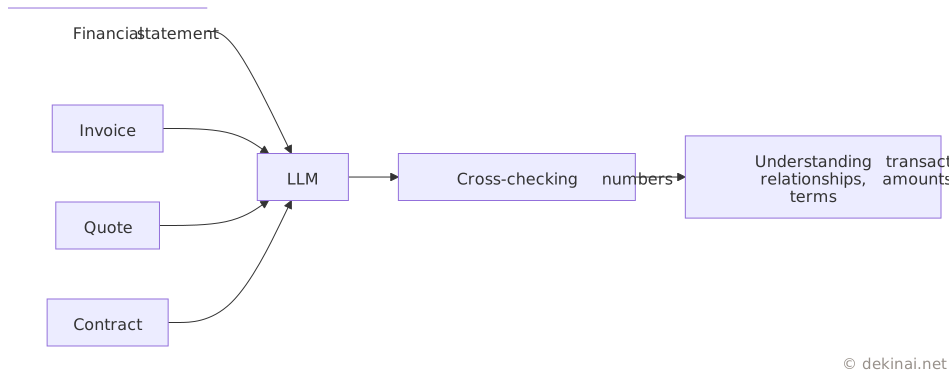
9. Reframing It as a Data Flow
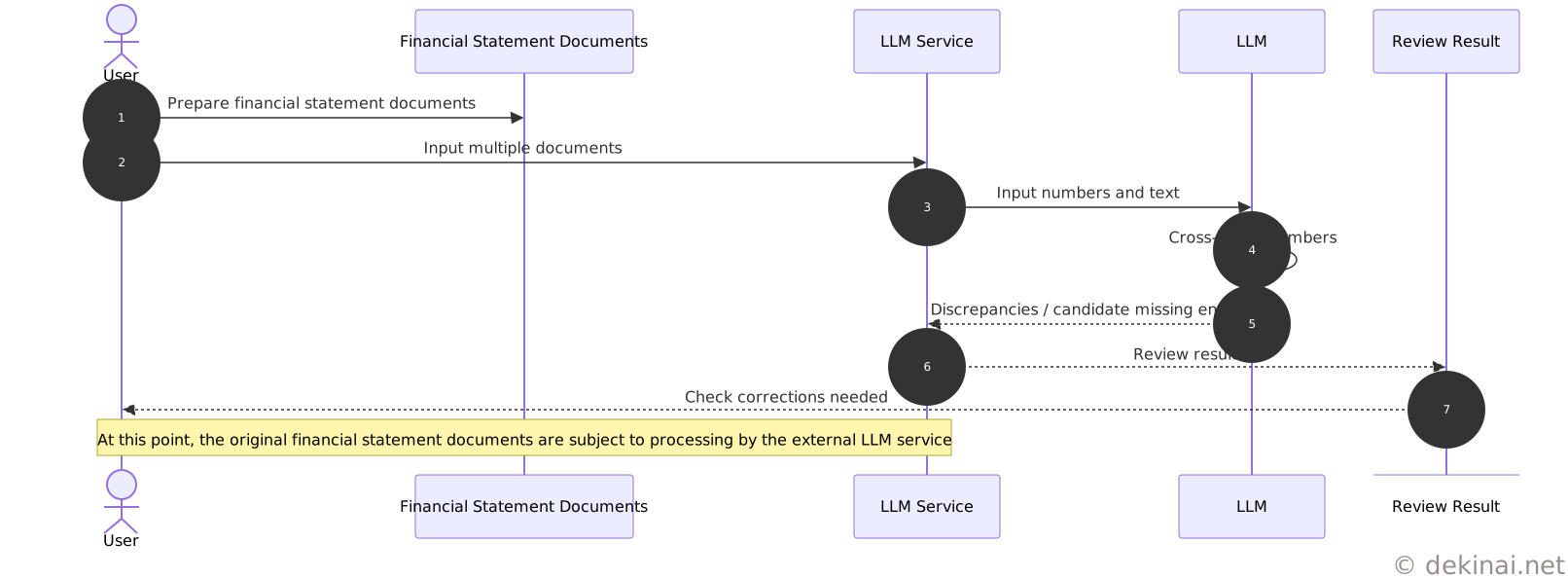
What matters here isn't just "can the AI check the numbers?" At the same time, you need to confirm "is the contract and operational setup such that it's acceptable to send these financial statement documents to that LLM service?"
10. Difference from Human Review
When a human reviews financial statements, it's simple.

On the other hand, when using an LLM service, it looks like this.

In other words, when using an LLM, it's not just "who reads it" — "which provider's system it passes through" also becomes a data management concern.
11. How Far Is "Just Have the AI Read Everything" Correct?
Financial Statement A
Invoice B
Sales List C
        ↓
       LLM
        ↓
"Please cross-check the numbers in these three"
        ↓
List of discrepancies
This kind of process works perfectly well as an LLM use case. However, it contains two separate judgments.
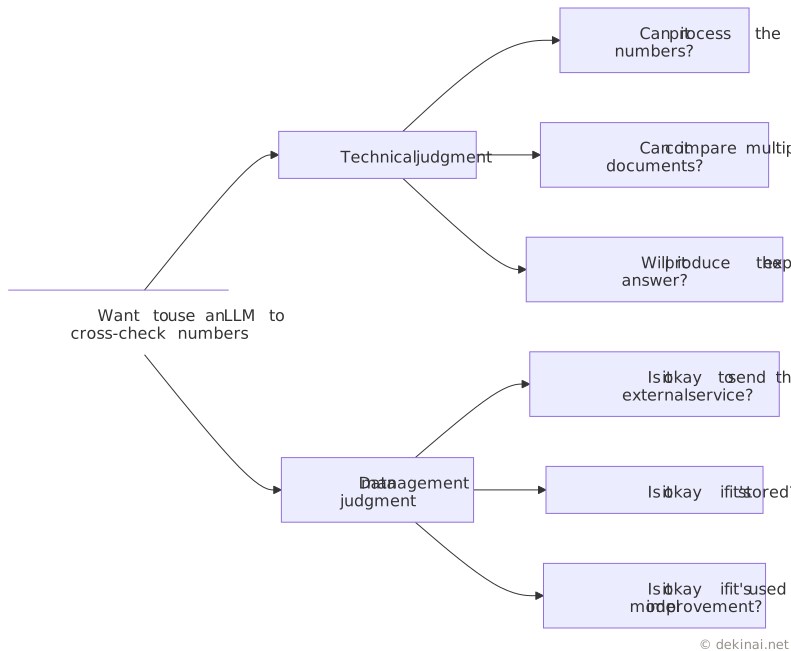
Even if the LLM's accuracy is high, that doesn't make data management constraints disappear.
12. "Feed It to the AI and It All Gets Learned" Is Not Accurate
The following three need to be considered separately.
| State | Meaning |
|---|---|
| Inference | Passing input data to the model to generate an answer |
| Storage | Retaining data for purposes such as history, logs, or safety measures |
| Training | Using data in the model improvement/training process |
Therefore, "sent to the AI ≠ became the AI's training data." On the other hand, the fact that "sent to the AI = at minimum, handed the data to the service provider's processing environment" remains as a separate issue.
13. Differences by Service Type
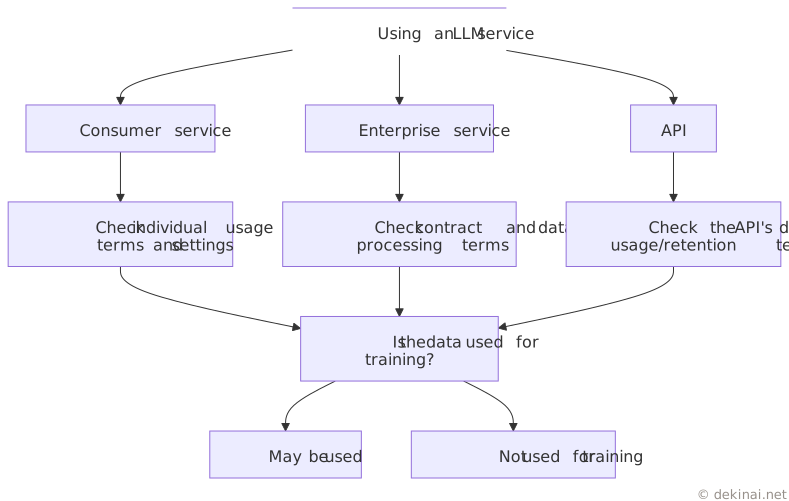
This isn't a matter of "it's this way because it's an LLM" — it's determined by "the data policy of the service you're using." Even for the same model, it's common for data usage terms to differ between the consumer UI, enterprise contracts, and the API.
14. "Not Used for Training" Alone Doesn't Complete the Check
For example, even if there's a condition stating "input data will not be used for model training," the following data flow itself doesn't disappear.
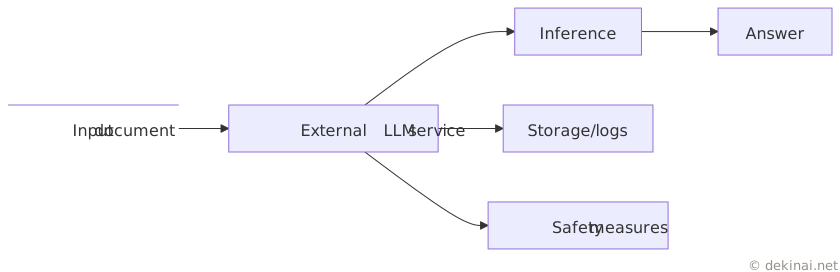
Therefore, "not used for training" and "not sent to an external service" do not mean the same thing.
15. With RAG, It's Separate from "Training"
In a RAG (Retrieval-Augmented Generation) setup where an LLM searches internal documents, the structure looks like this.

In this case too, "referenced via RAG ≠ the model was retrained." However, depending on the RAG configuration, the documents being searched and the retrieved chunks may end up being sent to an external LLM service. So separately from "whether it's used for training," you need to look at "where the documents are being sent."
16. Inputs to Especially Avoid
When inputting highly confidential documents into an LLM, the following kinds of information require particular caution.
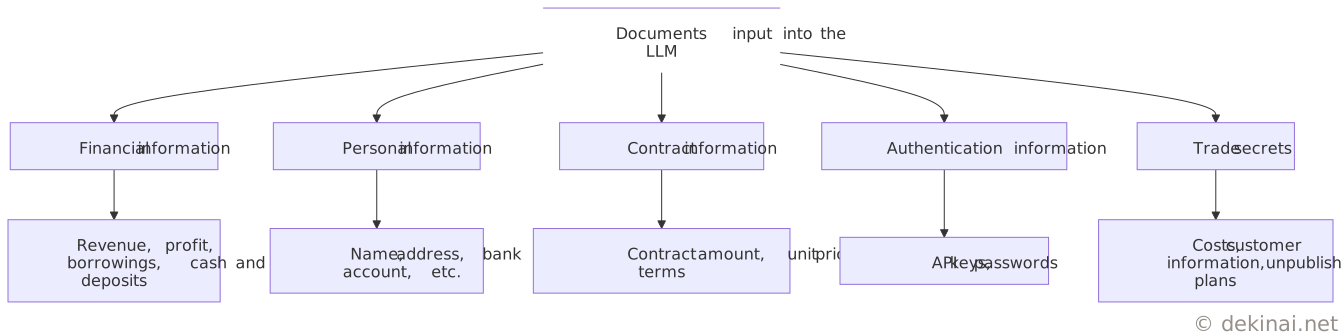
In particular, for passwords, API keys, private keys, credit card information, unpublished financial information, customer lists, personal bank account information, and the like, you need to judge "is this data okay to hand over to an external service?" before even asking "can the AI process it correctly?"
17. Items to Actually Check
When inputting highly confidential documents into an LLM, check at least the following.
| Item to check | What to check |
|---|---|
| Destination | Which provider/service the data is sent to |
| Storage | Whether input data or conversations are stored |
| Retention period | How long it is retained |
| Access | Who or what mechanism can access it |
| Safety measures | Whether it's used for abuse detection, etc. |
| Model improvement | Whether it's used for training/model improvement |
| Opt-out | Whether you can refuse training use, etc. |
| Contract | Whether terms differ between consumer, enterprise, API, etc. |
| Deletion | Whether data deletion is possible |
| Subcontractors | Whether it may be passed to third parties or affiliated providers |
18. The Most Important Summary
Summarizing everything so far into one diagram looks like this.
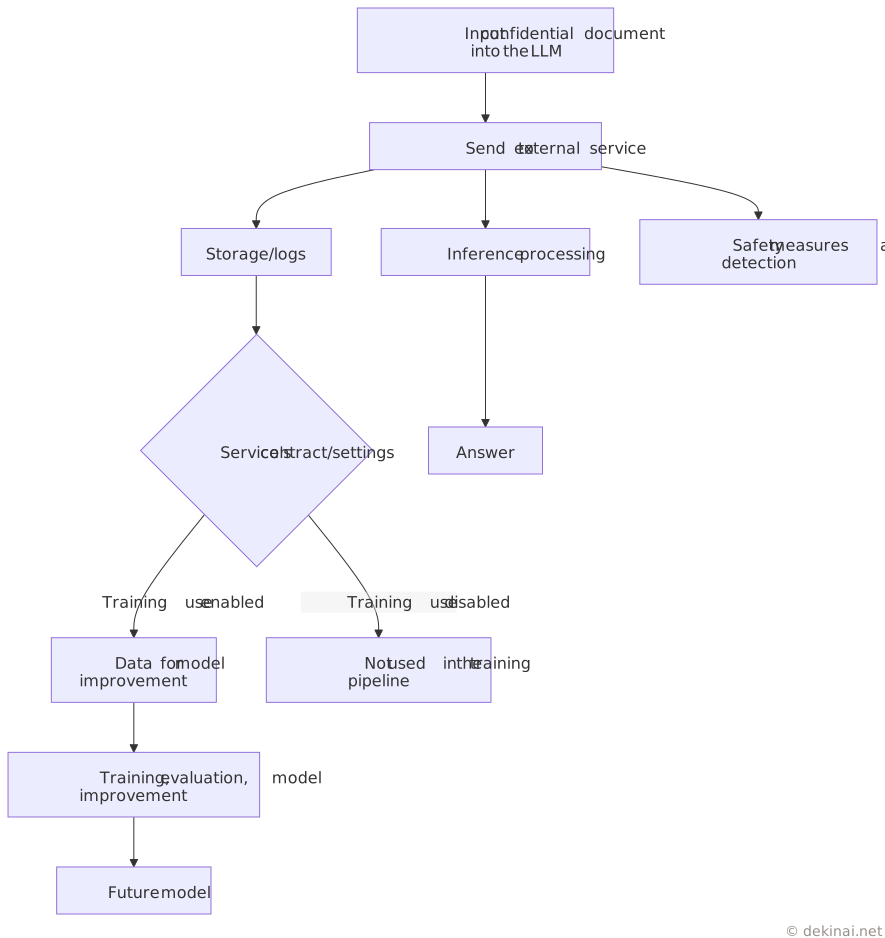
In other words,
Sending ≠ Storage ≠ Training
That's the case. Furthermore,
Not used for training ≠ Not sent to an external service
is also true.
19. Summary
If you think of inputting a document into an LLM as just "document → AI reads it → an answer comes out," you'll overlook the data management pathways involved. In reality,
Document
 ↓
Sent to LLM service
 ↓
Inference
 ├─→ Answer
 ├─→ Logs / history
 ├─→ Safety measures / abuse detection
 └─→ Data for model improvement, depending on conditions
             ↓
          Training pipeline
             ↓
          Future model
you need to consider these multiple paths. In particular,
"whether it's used for training" and "the act of handing data over to an external service itself" are separate issues
That's the case. Even for a service that says "not used for training," that doesn't negate the fact that the input data still passes through the service provider's processing infrastructure.
For this reason, when inputting highly confidential documents into an LLM, you need to separately check each of the following: "where is it sent → what is processed → what is stored → who can access it → for what purpose is it used → is it used for model improvement/training."
References
- OWASP Top 10 for LLM Applications 2025 — LLM02:2025 Sensitive Information Disclosure (Ranked #2 in the 2025 edition's list of risk items. Covers memorization/reproduction of training data and unintended disclosure of system prompts and sensitive information, among others.)
* Actual data usage terms vary depending on the LLM service, plan, contract, API usage, settings, and so on. When handling confidential information, always check the target service's latest terms of use, privacy policy, and data usage terms.